NAEM’s 2012 Environmental Women’s Leadership Roundtable
July 9-11, 2012, Washington, DC
This event will provide focused learning, while connecting corporate environmental women leaders and Washington-based policy influencers: http://www.naem.org
Purpose Enterprise: Better business and beyond ©
Category: Environment
This event will provide focused learning, while connecting corporate environmental women leaders and Washington-based policy influencers: http://www.naem.org
© Ann Goodman 2012
At BBB’s NYC Forum on Corporate Responsibility on June 7, sustainability thought leaders talking about global and domestic challenges, solutions and trends had the following to say about what keeps them up at night:
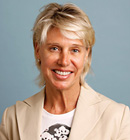 Pamela Gill Alabaster
L’Oreal’s SVP, Corporate Communications,Sustainable Development & Public Affairs:
“Sustainable consumption–fewer resources, a swelling middle class,
[how to] share responsibility.”
 Anisa Kamadoli Costa
VP, Global Sustainability and Corporate Responsibility, Tiffany & Co., and President, The Tiffany & Co. Foundation:
“Balancing Wall Street’s short-term earnings [demands] with long-term sustainability goals.”
 Dave Stangis
VP, Public Affairs and Corporate Responsibility,
Campbell Soup Company, and President, Campbell Soup Foundation:
“The sheer amount of things we could do…as I plug into all the parts of the business, the untapped opportunities in brand building, efficiencies…”
And where do they see the field going in the next five to 10 years? Continue reading “What Keeps Sustainability Execs Awake?”
Presented by the New Economics Institute
Bard College, Annandale-on-Hudson, New York
Details: conference@neweconomicsinstitute.com
© 2012 Ann Goodman
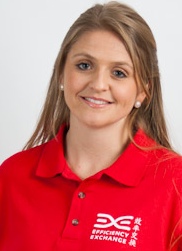
How can companies avoid missteps in the supply chain that can lead to snafus like the embarrassing exposure of dubious practices at Apple’s Chinese supplier factory, Foxconn?
One way, says Taryn Sullivan, Founder and CEO of Efficiency Exchange (EEx), is to show local factories why better, more sustainable practices can actually help the local business from the inside—not just serve as a stepping stone to cut deals with multinational customers.
A start-up that is building a technology platform to help suppliers and buyers reduce operating costs, EEx believes there are new ways to drive sustainability throughout the chain. Continue reading “Supply Chain Lessons from EEx’s China Report”
Looking forward to attend on Tuesday:
“Energy storage technologies are at the forefront of the next wave of the cleantech revolution, with new products and applications for clean transport, energy efficient buildings and the smart grid. Strategic investments are needed to accelerate the development and full commercialization of these technologies. What is the current state of these technology advancements, what products are being introduced into the marketplace, what are the real world experiences with these products to date and how will their applications shape urban life in the future?”
© Ann Goodman 2012
Q&A: Following UN Women NYC’s “3 Pillars of Sustainability,” May 8, 2012, Ann talks with Pharmajet’s Heather Potters, Founder and Chair, about the role of business in global health.

1. Ann: PharmaJet is a new medical device company, and your mother developed the technology. What’s the company’s role in furthering sustainable development?
Heather: The company’ mission is to make a positive contribution to reducing the global disease burden through injection delivery of vaccines with its devices, safely and effectively.
2. Ann: How do you do that?
Heather: We’ve developed a simple, innovative needle-free jet injection technology—focused on delivery of vaccines into the body. “Needle-free” is not new, but the way in which PharmaJet has approached it is. A variety of care givers, customers, patients, governments, and NGO’s have used the technology and confirmed it to be very useful and desirable in a variety of healthcare environments, as an alternative to needle-syringe and the resulting disposal, needle-stick, needle re-use and liability issues they face.
3. Ann: Is the traditional vaccination process potentially a global health issue?
Heather: The aim of vaccination is to help the body generate immunity to disease. Continue reading “PharmaJet’s Global Return on Health”
© 2012 Ann Goodman
Q&A: Following UN Women NYC’s “3 Pillars of Sustainability,” May 8, 2012, Ann talks with charity:water’s head of programming, Christy Scazzero, on how awareness of water sanitation affects global sustainability—and the impact it’s had in the developing world.

1. Ann: What does charity:water do to advance sustainability?
Christy: charity: water is a non-profit organization that helps bring clean, safe drinking water to people in developing countries via an online donor platform. We do this through raising awareness about the water crisis and funding non-governmental organizations (NGOs) to implement water programs across sub-saharan Africa, Asia and Haiti.
2. Ann: How do you define sustainability?
Christy: We’re committed to ensuring that communities benefiting from water systems continue to have uninterrupted access to clean water. For the purposes of charity: water, water, sanitation, and hygiene services are considered “sustained” when systems and procedures Continue reading “Water Sanitation & Sustainability”
© Ann Goodman 2012

Q&A: Following UN Women NYC’s “3 Pillars of Sustainability,” May 8, 2012, Ann talks with IIRR Development Officer Lara Crampe about how one community addresses poverty, environment, food security, health and welfare.
1. Ann: What does the Institute for International Rural Reconstruction (IIRR) do to advance sustainability?
Lara: IIRR has been working for more than 50 years in community-led development. We work with rural communities in Southeast Asia and East Africa. Our work put communities in the driver’s seat of their own development. We believe that this is absolutely necessary for sustainability and effectiveness in development work. We have more than 150 partners that we work with and through on the ground. To us, the key feature of a sustainable development project is that the local people are involved in all levels of planning, direction, implementation, management, and ultimately the success of the work.
2. Ann: What is IIRR’s LOWO program for family planning? What makes it particularly sustainable? Continue reading “How Men Work with Women on Family Planning—and Achieve Sustainability”
© Ann Goodman 2012
It was an honor to moderate the UN Women NYC’s panel–“Three Pillars of Sustainability”–at Saatchi & Saatchi’s Manhattan offices Tuesday evening, May 8.
As we approach the global Rio + 20 conference on sustainability next month, the topic could hardly be timelier.
Below, I share with you my introductory comments to the audience of over one hundred men and women in the business, government and non-profit sectors.
Stay tuned–right here–for more inspiring voices from the panelists!

“Thanks to the whole crew at UN Women NYC for inviting me to moderate this important panel tonight–especially Cheryl, Diane and Dee Dao.
“And particular thanks to these two remarkable young girls, age 6 and 8, who have raised money for water wells in the developing world! Their work embodies a key message of the initial definition of sustainable development, namely “meeting the needs of the present without compromising the ability of future generations to meet their own needs.” There’s inter-generational equity built into the definition. And the future is our inspiration in the present! Continue reading “Ann Introduces UN Women’s “3 Pillars of Sustainability””
© Ann Goodman 2012
 Imagine: You’ve been a practicing lawyer for 20 years. You’ve been elected to Parliament. You’ve run the environment Ministry for a whole country. You’ve been a Cabinet member. You own a successful business, including the building from which it operates. You have an impeccable financial record.
Then imagine: You go to ask for a loan for a larger building to support your expanding energy and environmental consulting practice, and the bank clerk asks you to bring in your husband — to sign the loan papers.
“No mature man with a successful business and a track record with the bank walks in and hears the desk officer say ‘you must bring your wife in to sign, or you can’t get a loan,'” explains H. Elizabeth (Liz) Thompson, now U.N. Assistant Secretary General and co-Executive Coordinator for the June Rio+20 Conference on Sustainable Development.
Her personal experience at the bank in her native Barbados, where she was the first graduate of the University of the West Indies to be appointed to the Cabinet and served as an elected Parliamentarian for 14 years, 12 of them as Minister of Environment, is among the many graphic indignities women face that have made Thompson an ardent supporter of women’s development, access to jobs and investment in the ‘green economy’ that is a central theme and objective of the upcoming international meetings in Rio.
Recruited by the U.N. in 2010, Ms. Thompson’s role “is to support the objectives and themes of the conference, build consensus around the objectives and themes, work with stakeholders at the political level, as well as non-state actors internationally, including the NGO community, business leaders and multilateral development world,” she explains.
As if that weren’t enough, she and a miniscule staff also support the negotiations and the U.N. Millennium goals and process, providing strategic messaging and producing papers and articles for U.N. agencies like U.N.EP and U.N.CTAD, as the Summit approaches.
A big role for big business
Thompson’s vision for the Rio summit outcomes includes a bigger role for business in sustainability — and a better role for women. Continue reading “Speaking of Rio+20: A Conversation with UN Assistant Secretary General Liz Thompson”
 Ann Goodman