Author: anngoodman

Can sustainability help JPMorgan Chase bounce back?

 © 2012 Ann Goodman

Even as JPMorgan Chase has incurred billions in losses from botched trading, acknowledged by its CEO Jamie Dimon as an “egregious mistake,” the stalwart bank has been enthusiastically supporting a new environmental strategy that spans all of its businesses.

In a particularly creative move, the bank recently announced it is financing an initiative in New York City to help building owners cover upfront costs of converting old boilers to natural gas. It is also encouraging home owners to make their homes more energy efficient through improvements that may be eligible for tax benefits.

Matthew Arnold, the Head of the Office of Environmental Affairs, sees the move as the sort of innovation he hopes the bank can achieve across businesses to help solve real-world environmental problems.

Appointing Arnold — former leader of PwC’s Sustainable Business Solutions, co-founder of Sustainable Finance Ltd., and COO of World Resources Institute — to the top environmental position a year ago was something of a coup for the bank. In Arnold, JPMorgan Chase has lured not just a daring environmental thought leader, but also a well-known implementer of sustainability projects. Continue reading “Can sustainability help JPMorgan Chase bounce back?”
Join Ann’s Panel at SEA Summit, Los Angeles, Sept. 13

Please join Ann as she speaks about Social Media for Impact Entrepreneurs during the Session on Marketing Your Social Enterprise at the Social Enterprise Alliance (SEA) Summit: Where Mission Meets the Marketplace, LA, Sept. 13, 4pm to 5:15 pm, PST.  For details and to register visit: :https://se-alliance.org/western-regional-summit

Ann and Lakis to Speak at Commitforum! in NYC, Oct. 2-3

Commitforum!, October 2-3, NYC

Join Ann Goodman and colleague Lakis Polycarpou at their session “Sustainable Supply Chains in the Age of Natural Disasters”

For 30% discount on entire conference, register at http://www.commitforum.com/ using ID Code GOODMAN30.

In the summer and fall of 2011 a torrent of rain and subsequent flooding washed over Thailand, a major supplier and key link in global supply chains, causing billions in damage and production shutdowns, with global automotive and computer companies among the hardest hit. While the scale of damage was unprecedented, it was only the latest Continue reading “Ann and Lakis to Speak at Commitforum! in NYC, Oct. 2-3”

Environment & Leadership: Tips from a Pro at NAEM Women’s Roundtable

© 2012 Ann Goodman

One of the outstanding presenters at NAEM’s recent roundtable onwomen’s leadership and environment was Susan Eisenhower, president of the Eisenhower Group Inc. and appointed member of the DEC’s commission
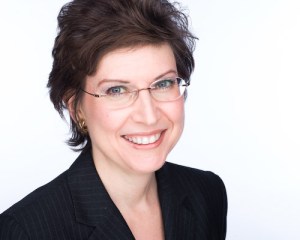
on America’s Nuclear Future (tasked with safely developing long-term solutions for the nuclear fuel cycle), and granddaughter of President “Ike” Eisenhower.
Her career has been one marked by progressive inquiry, critical thought and independent judgment.
She had some particularly wise words to impart to on leadership and environment to an audience of women environmental professionals in the corporate, policy and nonprofit sectors. Here are a few of her tips:

On Leadership: Continue reading “Environment & Leadership: Tips from a Pro at NAEM Women’s Roundtable”

In Search of a Sustainable “New” Economy

© 2012 AnnGoodman

Bob Massie, NEI President

Who better to guide an emerging “new economy” than Bob Massie, the celebrated former executive director of Ceres–among the first organizations to bring together the business, investment and activist communities for a sustainable future—and a father of the Global Reporting Initiative (GRI) that continues to transform how companies conceive and report sustainability initiatives?

In his new role as president of the New Economics Institute (NEI), Massie is bringing to bear the full scope of his wide professional experience and personal strength—as leader of those groups, as well as business professor, Episcopal minister, apartheid rights activist, political veteran (most recently in his race for the Democratic Senate candidacy in Massachusetts), and healthy survivor of hepatitis, HIV and a liver transplant, recounted in his new book A Song in the Night.

That depth of character and breadth of action will likely be needed to help lead a fledgling movement that, up to now, may have been viewed by skeptics as something of a populist sideline.

I caught up with Massie—one of my longtime heroes in the business sustainability movement–in June at NEI’s first conference in upstate New York, which brought together economists, academics, business leaders, government officials, community organizers and others to examine what’s not working in our economy—as well as experiments that are working–and what role business and finance, in concert with other sectors, can play to help create positive change.

So what is the new economy? Continue reading “In Search of a Sustainable “New” Economy”

Digital Security: Business’s Social Responsibility?

©2012AnnGoodman

Harriet Pearson, IBM

At the BBB Forum on corporate citizenship in NYC recently, IBM’s Harriet Pearson, VP Security Counsel and Chief Privacy Officer, made a good case for why Internet security should now be considered a number one business responsibility issue.

The recent LinkedIn snafu is just one example of the exposure a company faces when hackers gain control.  That sort of break-in is reason enough to address security and electronic privacy.

But the argument for data protection as a social responsibility concern goes deeper.

There are four drivers putting these issues on leadership’s corporate citizenship agenda , Pearson explains:

  1. Data
  2. Connectivity
  3. Risk
  4. Regulation

1.Data Proliferation

“There’s been more data created in the past two years than… Continue reading “Digital Security: Business’s Social Responsibility?”

The cost of disaster: Putting a price tag on climate change

©2012 Ann Goodman

Professor John Mutter

In this era of apparently mounting natural disasters worldwide—many, such as floods from hurricanes, likely related to changing weather patterns linked to climate change—one might ask: How much do such disasters cost? How are the costs calculated?
In fact, someone has asked—analyzing not just the cost of the event itself, but the larger economic costs linked to build-up and often long recovery.

“The public focus [of a disaster] is on the moment, the trauma of the extreme event,” says John Mutter, Professor of Earth and Environmental Sciences, as well as International Public Affairs, at Columbia University’s Earth Institute. “The economic loss focuses on that moment, too—what was actually lost at the time.”

However, that loss to the economy—the chain of production, consumption and everything that goes into it—doesn’t happen in a moment, but actually begins after, he says, “with losses that go beyond the value of the built structures trashed at the time, beyond the capital asset loss, to a deeper economic loss that happens over time.”

Three-pronged process

The theory of calculating disaster costs is just developing, as natural disasters become more prevalent; business can incorporate principles from a three-pronged process into new strategic thinking on what disaster is and how it might affect particular sectors or individual companies. Continue reading “The cost of disaster: Putting a price tag on climate change”